
Energy Efficient Washing Machines Northern Ireland Homes Should Consider

With electricity prices in Northern Ireland running 10–20% higher than much of Great Britain, every kilowatt-hour you save at home counts. Your washing machine is one of the hardest-working electrical appliances in the house - and one of the easiest places to cut your energy bills without changing your lifestyle. Here's what Northern Ireland households need to know about choosing an efficient washing machine in 2026.
Key Takeaways
-
Energy efficient washing machines rated A or B under the post-2021 UK label system can save Northern Ireland homes dozens of pounds per year on electricity usage compared with older models.
-
Models rated A or B offer maximum energy savings, but the actual kWh per 100 cycles figure matters more than the letter alone.
-
Choosing the right drum size (7kg–12kg) and spin speed (1200–1400 rpm) is just as important as the energy rating for real-world running costs.
-
Mullen Domestic in Enniskillen stocks leading brands including Bosch, Siemens, Miele, Hotpoint, Indesit, Samsung, and Beko - all with eco programmes and inverter motors for efficient washing.
-
Free local delivery, responsible removal of your old appliance, and personalised advice are included when you buy from Mullen Domestic across Northern Ireland.
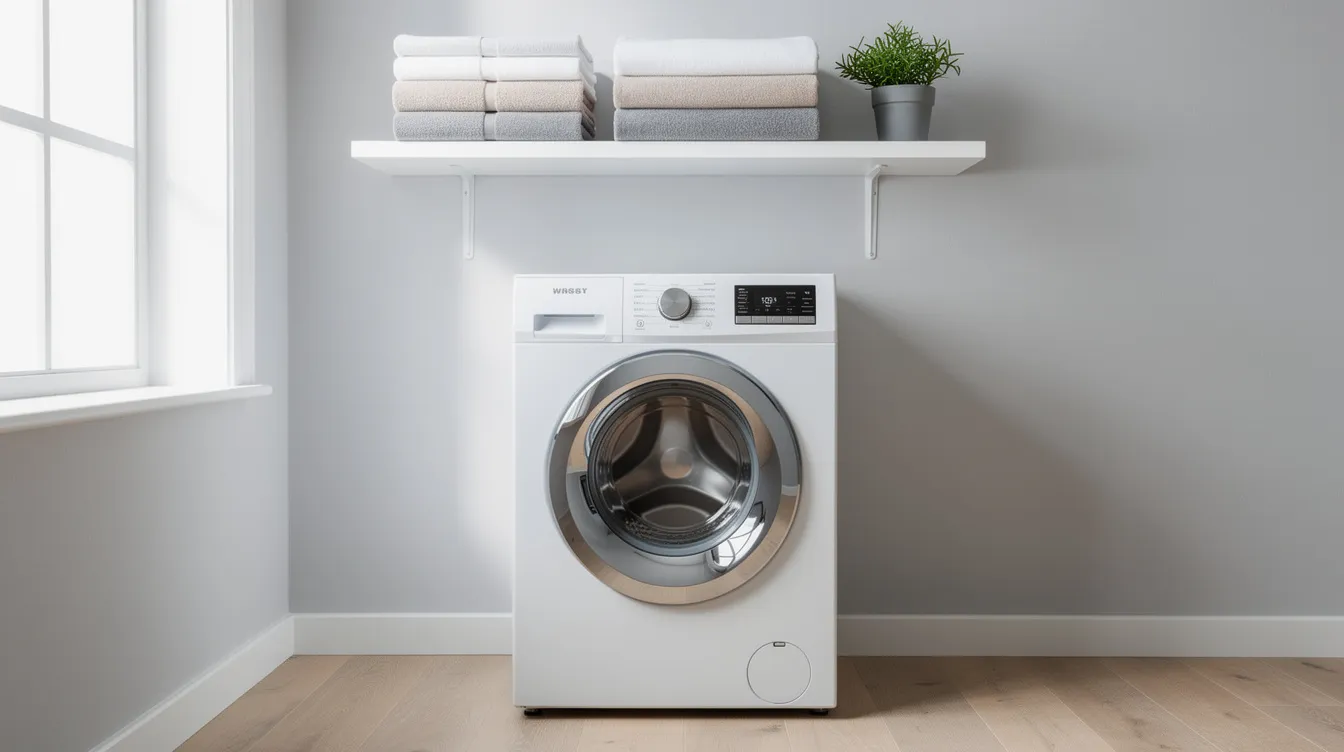
Why Energy Efficient Washing Machines Matter in Northern Ireland in 2026
Electricity rates in Northern Ireland currently sit around 26–29 pence per kilowatt-hour on standard variable tariffs - noticeably higher than the Ofgem reference rate used in many UK calculations. That means every appliance in your home carries a steeper cost to run, and it's not just home heating that deserves attention.
Washing machines account for a meaningful share of household electricity usage, particularly in a typical household doing four or more loads per week. The heating of water inside the drum is the single biggest energy draw during a wash cycle. Modern washing machines use less energy and water than their predecessors, and energy-efficient appliances use less electricity overall - a straightforward win when your rates are already high.
Replacing a 10+ year old washer with a 2026 A or B rated model can realistically save £25–£50 per year on electricity alone. Upgrading to an A-rated washing machine can save around £120 compared to a D-rated model over the machine's lifetime. Beyond your electricity bill, the environmental benefits are real:
-
Lower energy consumption means fewer CO₂ emissions linked to Northern Ireland's electricity grid.
-
NI's fuel mix is gradually decarbonising, but every kWh you don't use still avoids emissions at the margin.
-
Reducing your carbon footprint through smarter appliances is one of the most practical steps any household can take.
Understanding Modern Energy Ratings on Washing Machines
Since the energy label reset in December 2021, the old A+/A++/A+++ system has been replaced by a straightforward A-to-G scale. Washing machines can have energy ratings from A to G. The top A band was deliberately left mostly empty to push manufacturers toward further innovation - which means many of the best washing machines on the market today sit comfortably in the B to D range.
Here's what the label on a new washing machine actually shows you:
|
Label Element |
What It Tells You |
|---|---|
|
Energy class (A–G) |
Overall energy efficiency ranking |
|
kWh per 100 cycles |
Energy consumption per 100 washes on the Eco 40–60 programme |
|
Drum capacity (kg) |
Maximum dry laundry load |
|
Water use (litres) |
Water consumed per cycle |
|
Programme duration |
How long the Eco 40–60 cycle takes |
|
Noise (dB) |
Spin-cycle noise level |
Energy ratings indicate appliance energy consumption per 100 washes, so you can compare different models directly. A-rated washing machines offer maximum energy savings, but a B or even C rated machine in 2026 can significantly outperform an old A+ model in real-world energy use. The key is to compare the actual kWh figures rather than relying on the letter alone.
Northern Ireland buyers should ask to see these numbers side by side. Mullen Domestic staff in our Enniskillen showroom can walk you through the labels and help you compare annual running costs between the models you're considering.
Key Features That Improve Energy Efficiency
The energy rating is just the starting point. Several core technologies in modern washing machines are responsible for delivering lower running costs and efficient washing day after day.
Inverter motors. Digital inverter motors adjust their speed according to the load and cycle phase, rather than running at full power regardless. Studies show they can reduce energy consumption by 20–30% compared with conventional motors. They also run more quietly and often come with long manufacturer warranties - up to 10 years on selected products from brands like Bosch and Samsung.
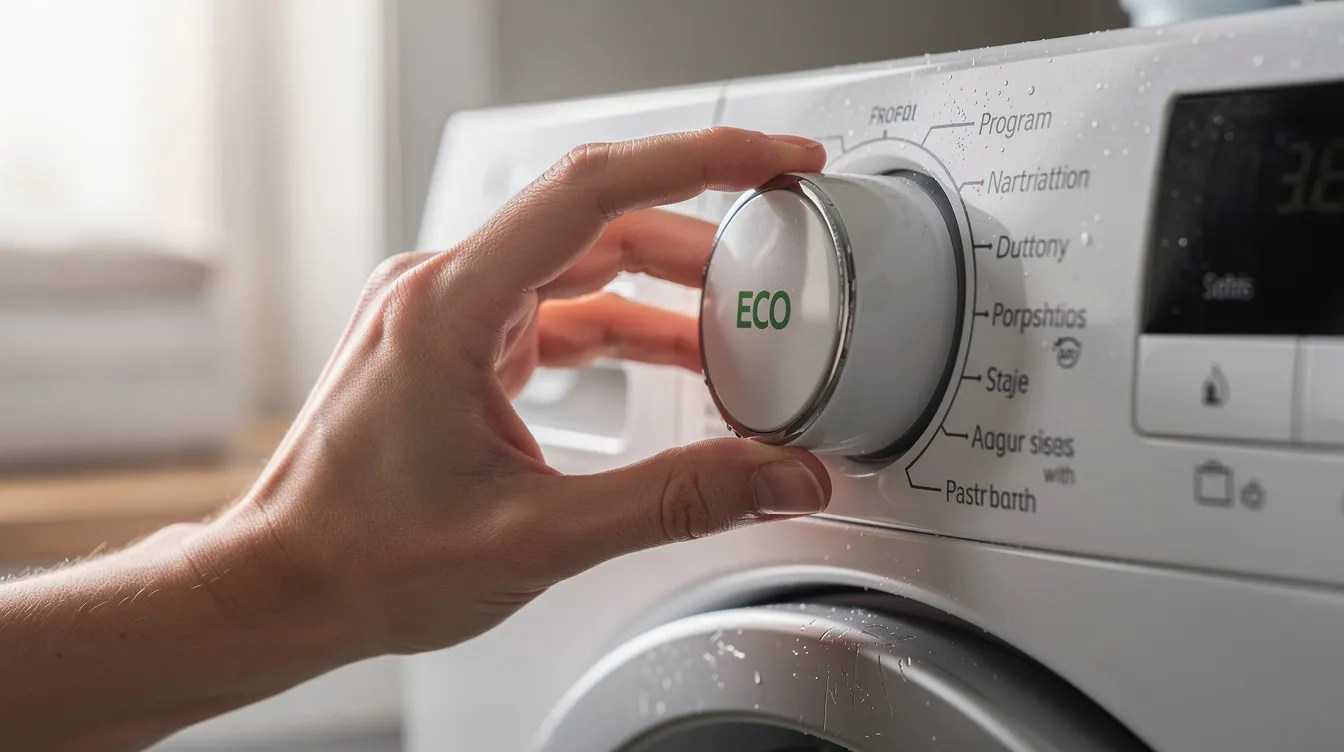
Eco 40–60 programmes. These standardised wash programs clean mixed cotton fabrics at optimised temperatures, using 20–30% less energy than a standard 60°C cotton cycle. Although the cycle may run longer, the electricity savings are substantial. Eco modes help reduce energy and water usage significantly over hundreds of cycles.
Automatic load sensing. Many models now weigh the laundry and adjust water volume and cycle time automatically. This prevents wasting energy and water on half-empty drums - a common source of inefficiency.
High spin speeds. A spin speed of 1400 rpm or above extracts more moisture from clothes, reducing your reliance on a tumble dryer. Since dryers are among the most energy-hungry home appliances, high spin speeds reduce moisture and the energy required by a tumble dryer. This indirect saving often exceeds the washing machine's own energy cost.
Delay start and off-peak timing. For Northern Ireland homes on time-of-use tariffs, scheduling your wash during off-peak hours can trim the cost per cycle. New models often feature quick wash settings for lightly soiled items, and delay-start timers let you run cycles overnight when rates may be lower.
Choosing the Right Capacity and Spin Speed for Efficient Washing
Matching drum size and spin speed to your household is one of the most overlooked factors in real-world energy efficiency. A machine that's too large for your needs wastes energy and water on every cycle; one that's too small forces you into extra loads.
Washing machines range from compact 3kg to large 14kg capacities, but here's a practical guide for Northern Ireland homes:
|
Household Size |
Recommended Drum |
Typical Use Case |
|---|---|---|
|
1–2 people |
7kg–8kg |
A 7kg washing machine is ideal for smaller households |
|
Family of 3 |
8kg–9kg |
Regular loads with occasional bulkier items |
|
Family of 4+ |
9kg–12kg |
A 9kg washing machine is ideal for a family of four; higher capacity models suit larger families with children, pets, or frequent bedding washes |
Washing machines now come in capacities up to 14kg, but avoid buying more than you need. Running a small washing machine at full load is more efficient than running a size washing machine that's half empty. For large households and larger families, a 10–12kg drum means fewer total cycles per week, which adds up to real savings.
For spin speed, 1200 RPM is ideal for everyday washing. If you regularly wash heavier fabrics, towels, or bedding, 1400–1600 rpm will extract more water and cut drying time. Consider noise ratings too - for open-plan homes in Belfast, Enniskillen, or anywhere the machine sits near living spaces, inverter motors typically knock 5–10 dB off spin noise compared with conventional motors.
Best Types of Energy Efficient Washing Machines for Northern Ireland Homes
Your home's layout and lifestyle will determine which type of washing machine delivers the best balance of energy efficiency and practicality.
Freestanding washing machines. Freestanding washing machines are the most popular choice across Northern Ireland, and for good reason. Freestanding models offer flexibility and ease of installation - you can position them in a kitchen, utility room, or garage without built-in cabinetry. They typically offer the widest range of energy efficient models and come in white and graphite finishes to suit modern interiors. Front-loading machines are generally more energy-efficient than top-loaders, and nearly all freestanding models sold in the UK today are front-loaders.
Integrated washing machines. Integrated washing machines are built into kitchen cabinetry, hidden behind a cabinet door. Integrated models provide a seamless kitchen design, making them popular in new-build Northern Ireland kitchens. However, the selection of models at the very highest energy ratings can be slightly narrower than freestanding options.
Washer-dryers. Convenient for small homes and apartments where space is limited, washer-dryers combine both functions in a single unit. However, they usually consume more energy overall than a separate efficient washing machine paired with a dedicated heat-pump tumble dryer. Where space allows, separating the two appliances is the better long-term choice for both high performance and lower running costs.
Energy Efficient Washing Machine Brands Mullen Domestic Recommends in 2026
At Mullen Domestic, we curate trusted brands known for strong energy ratings, proven reliability, and proper aftercare across Northern Ireland. Here's what we recommend in 2026.
Bosch. Known for their EcoSilence Drive inverter motors, Bosch offers A and B rated models with clear Eco 40–60 programmes. Their machines deliver quiet, efficient washing and consistently rank among the best washing machines in independent tests.
Siemens. Built on similar German engineering, Siemens washing machines feature intelligent load sensing and iQdrive motors that optimise electricity usage per cycle. Their energy labels clearly break down consumption data, making it easy to compare annual running costs.
Miele. A premium option engineered for lifespans of 20 years or more, Miele machines consistently achieve excellent energy ratings. Their specialist programmes protect clothes so they last longer - reducing waste as well as energy use.
Hotpoint, Indesit, and Beko. These value-focused brands offer budget-friendly energy efficient models with solid performance. They're particularly popular with first-time buyers, landlords, and customers looking for competitive pricing without sacrificing core efficiency features.
Samsung. Many washing machines now include smart technology features, and Samsung leads here with Wi-Fi connectivity, AI-driven energy modes, and automatic water and electricity adjustments. Their models appeal to Northern Ireland homes wanting both convenience and strong energy performance.
All of these leading brands are available in store at our Enniskillen showroom, with expert advice to help you find the right model for your home.
Practical Tips to Use Less Electricity with Your Washing Machine
Even the best energy efficient washing machine can waste power if used carelessly. Here are practical ways to reduce energy and save money on every cycle.
-
Wash at 30°C for most loads. Running a washing machine at 30 degrees can save roughly £28 a year on electricity. Reserve 60°C+ for bedding, towels, heavily soiled clothes, or items that genuinely need a hygiene wash.
-
Run full loads. Full loads consume less water and electricity than multiple half-loads. Aim to fill the drum to about 80% capacity - enough for efficient washing without overpacking.
-
Use high-speed spin settings where fabrics allow. This cuts tumble dryer time and overall electricity usage. Air drying clothes saves energy compared to using a tumble dryer when possible, so combine high spin with line-drying for the biggest savings.
-
Use eco settings. Using eco settings helps save energy and water on every cycle. The cycle finishes later than a quick wash, but the energy saving is worth the patience.
-
Maintain your machine. Clean filters regularly, check hoses for kinks, and run a drum-clean cycle once a month. A well-maintained machine operates at peak efficiency for longer.
-
Think beyond the washing machine. Pairing an efficient washing machine with good home heating and ventilation helps you line-dry indoors during Northern Ireland winters, reducing reliance on energy-hungry dryers. Other upgrades like cavity wall insulation and even switching to LED lighting - which is extremely energy efficient - all contribute to lower heating bills and electricity usage across your home.
Why Buy Energy Efficient Washing Machines from Mullen Domestic?
Mullen Domestic has been a family-owned retailer in Enniskillen since 1983, serving customers across Northern Ireland with honest expert advice and dependable aftercare. We're not a faceless warehouse - we're your neighbours.
Here's what sets us apart:
-
Expert, local advice. Our team helps you interpret energy ratings, compare electricity usage figures, and calculate real running costs before you buy. Whether in store or by phone, you'll get personalised advice tailored to your household.
-
10,000 sq ft showroom. See working displays of modern washing machines alongside other home appliances - dishwashers, cookers, fridges, and efficient boilers and stoves. It's the best way to compare different models before committing.
-
Free local delivery and old appliance disposal. We deliver free around Enniskillen and across our local area, and we'll responsibly remove your old appliance under WEEE guidelines. No hassle, no extra cost.
-
Competitive pricing and trade support. We support both homeowners and trade customers with competitive pricing, spare parts, special offers on selected products, and reliable post-sale support. Appliances cost less stress when you buy from people who stand behind them.
How to Shop for an Energy Efficient Washing Machine with Us
Whether you prefer to browse in store at our Enniskillen showroom or call for a recommendation, here's a simple process to find the right washing machine for your Northern Ireland home.
-
Measure your space. Check width, depth, and height - and note whether you need freestanding or integrated.
-
Decide on drum size. Match capacity to your household: 7kg for smaller households, 9kg for families, or higher capacity models for large households.
-
Compare energy ratings. Look at the kWh per 100 cycles, not just the letter grade. Ask our staff to show you the differences between models.
-
Refine by features and budget. Prioritise the features that matter - inverter motor, eco programmes, smart connectivity - and set a realistic budget.
-
Call or visit. Our team can give tailored recommendations based on your laundry habits, household size, and existing home appliances.
Consider combining your new washing machine purchase with other energy efficient upgrades - a dishwasher, fridge-freezer, or efficient home heating product. Every efficient appliance you add reduces your overall energy bills.
Stock, delivery times, and specific models may change through 2026, so check current availability by contacting us directly.
FAQs about Energy Efficient Washing Machines in Northern Ireland
How much can I realistically save by upgrading my old washing machine?
Savings depend on how often you wash and how old your current machine is. For a family doing five or more loads per week, upgrading from a 10–15 year old machine to a modern A or B rated washer can save £25–£50 per year on electricity alone. Over a machine's 10–15 year lifespan, that adds up to hundreds of pounds. Heavy-use households in Northern Ireland will see the fastest payback on the price difference between an average and a highly efficient model. Ask Mullen Domestic staff to compare the kWh figures between the specific models you're considering - we'll show you the numbers in plain terms.
Is a B rated washing machine in 2026 still considered energy efficient?
Absolutely. After the 2021 label reset, very few washing machines achieve an A rating. A B rated machine in 2026 is genuinely energy efficient and will outperform most machines made before 2018. The important metric is the actual kWh per 100 cycles shown on the label. A well-designed B rated model with an inverter motor and effective load sensing can deliver annual running costs that are only marginally higher than an A rated unit. Mullen Domestic can point out which current models offer the lowest electricity usage while still meeting your capacity and feature needs.
Do smart washing machines really improve energy efficiency or just add convenience?
Smart connectivity - remote start, notifications when a cycle finishes, energy usage reports - is primarily a convenience feature. However, some 2026 models include AI or energy-saving modes that automatically optimise water and electricity use based on load weight and fabric type. The biggest efficiency gains still come from core design: inverter motors, drum engineering, and Eco programmes. Wi-Fi alone won't dramatically cut your energy consumption. That said, if smart control encourages you to use eco programmes more consistently, the indirect savings are real. We stock models at Mullen Domestic that combine both convenience and strong energy ratings.
Is it worth paying extra for a premium brand purely for energy efficiency?
Premium brands like Miele often sit at the top of energy efficiency tables, but the real value is a combination of low running costs, durability, and better wash performance over many years. For some households, a mid-range model from Bosch or Beko with a strong energy rating may offer the best balance of upfront cost and long-term savings. The right choice depends on your budget, how many years you expect to keep the machine, and your local electricity prices. Discuss your situation with our team - we'll help you decide whether a premium or mid-range option makes more financial sense for your household.
Should I replace my washing machine now or wait until it fails?
If your machine is over a decade old, increasingly noisy, or needing frequent repairs, replacing it proactively with an energy efficient model is usually more economical than continuing to patch an inefficient one. The energy savings start immediately, and upgrading before total failure gives you time to compare energy ratings, features, and prices properly - rather than making a rushed emergency purchase. It also means you can take advantage of any special offers or free delivery. Customers across Northern Ireland are welcome to call Mullen Domestic or visit us in Enniskillen to assess whether upgrading in 2026 would be cost-effective for their specific situation.