
Best Domestic Washing Machines for Your Home in 2026

Key Takeaways
This is a 2026 buying guide for UK and Northern Ireland households looking to buy a washing machine that fits their home, budget, and laundry habits. Every model named here is currently available, and all energy labels and prices reflect late-2026 figures.
-
Best washing machine overall: Samsung Series 9 Bespoke AI 9 kg, with AI wash, automatic dosing, and quiet operation; around £800–£950 at UK retailers.
-
Best cheap washing machines on a tight budget: Beko B3W5841 8 kg (A-rated, ~£65/year running cost) and Russell Hobbs RH914W116W 9 kg (A-rated, Rapid 15 quick wash).
-
Best for large families: Hisense WF5I1245BBR 12 kg KitchenFit and Samsung WW11DB8B95GB 11 kg; both handle bulky items and larger loads with strong energy ratings.
-
Best integrated model: Bosch Series 6 WIW28302GB 8 kg; 66 dB spin noise, SpeedPerfect option, and 5-year warranty when registered.
-
Energy efficiency matters now more than ever: A-rated models use as little as 0.47 kWh per Eco 40–60 cycle. Under the current energy price cap, the difference between an A-rated and a D-rated machine can add up to £100–£200 over ten years for a family washing four to five loads a week.
-
Mullen Domestic offers free local delivery around Enniskillen and will remove and recycle your old machine, saving you the hassle of arranging disposal separately.
Introduction: Choosing the Right Washing Machine for Your Home
Choosing the right washing machine affects your electricity bill, how long your clothes last, how much noise fills your kitchen, and how many hours you spend sorting and re-washing loads that did not come out clean. A poor choice costs money every week; a good one pays for itself.
Most UK and Northern Irish homes use freestanding washing machines slotted under a kitchen worktop. Integrated washing machines, hidden behind a cabinet door, are becoming more common in open-plan kitchens and new-build utility rooms. Both types come in a wide range of capacities, energy ratings, and price points. Choosing the right washing machine requires considering budget, household size, and laundry space.
This guide covers 2026 models available in the UK and Northern Ireland. Prices and energy labels use the A-to-G scale introduced in 2021, and all running-cost estimates reflect late-2026 electricity tariffs. Mullen Domestic, a family-run Enniskillen retailer founded in 1983, stocks the brands discussed here. Staff in the 10,000 sq ft showroom help customers match drum size, features, and budget to their household every day.
The structure below starts with top picks, then moves into how to compare models by energy efficiency, noise, fabric care, and key specifications before covering installation, maintenance, and when to repair versus replace.
Best Washing Machine Overall (2026)
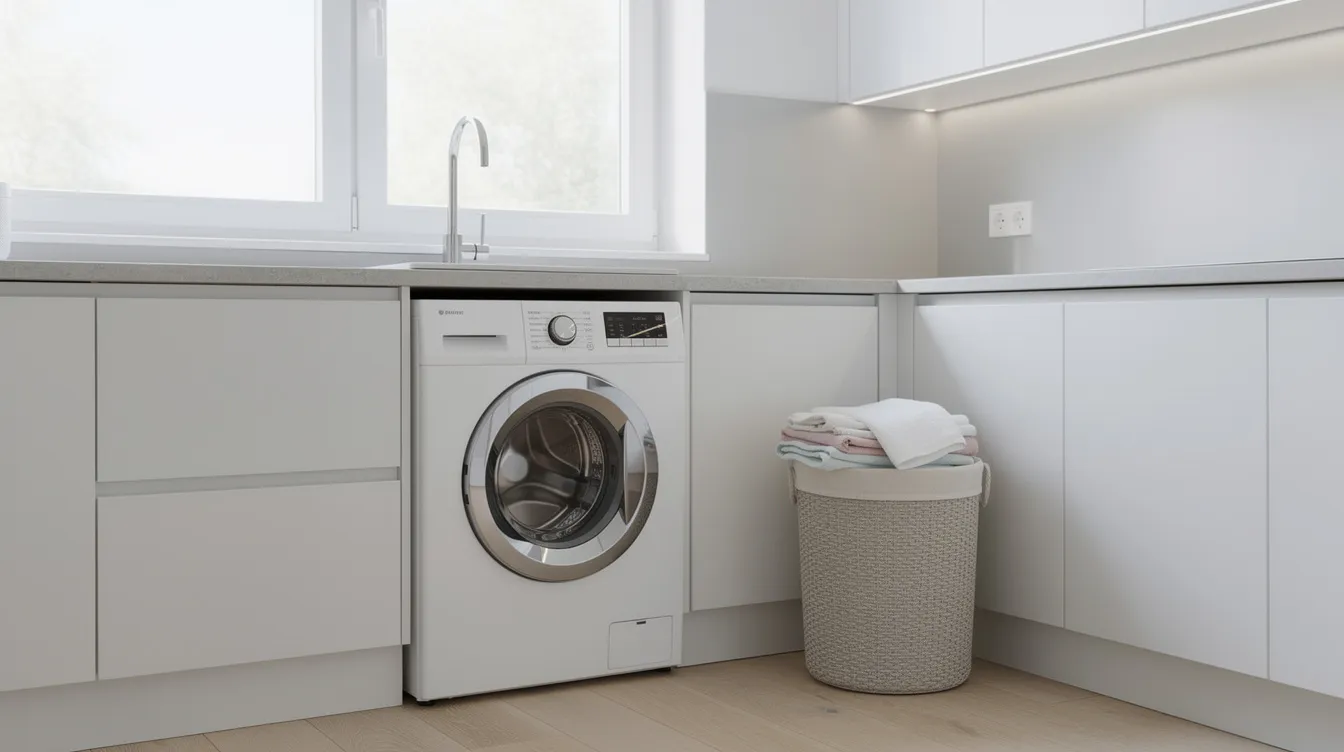
The Samsung Series 9 Bespoke AI 9 kg front-loader earns the top spot for most homes. It combines strong cleaning performance on the Eco 40–60 cycle with quiet spin operation, good energy efficiency, and a 9 kg drum that fits families of three to five without being oversized for couples.
Samsung's AI mode automatically adjusts wash settings based on load weight and soil level, which means less guesswork and less wasted water. The automatic dosing detergent drawer stores enough liquid detergent and softener for multiple washes and dispenses the correct amount each time. Smart features include phone app control and automatic programme selection through the SmartThings app, plus useful cycles: a quick wash that handles lightly soiled clothes in 15–30 minutes, a steam cycle, and an allergy programme. The Samsung WF90F09C4SU1 removed stubborn tough stains on Eco mode in independent user tests, reinforcing its wash quality credentials.
Expect to pay around £800–£950 in late 2026. Mullen Domestic can demonstrate similar Samsung AI models in their Enniskillen showroom.
On the plus side, the machine is energy efficient, quiet during its spin cycle, and handles a large enough drum for busy households. On the downside, the upfront cost is higher than mid-range alternatives, and you need a wi fi connection to unlock the full benefit of the smart app and remote monitoring. Some early adopters have reported occasional shock-absorber issues, though these remain uncommon.
Best Cheap Washing Machines (Great on a Budget)
The best cheap washing machines under £400 can still deliver reliable cleaning performance and sensible running costs. The key is knowing what to prioritise and what to accept as a trade-off.
The Beko B3W5841 8 kg is an A-rated machine spinning at 1,400 rpm with an Eco 40–60 energy consumption of about 0.468 kWh per cycle and 47 litres of water. Estimated annual running cost sits around £65 for a household doing four to five washes a week, and over ten years that totals roughly £650 in energy and water. The Beko BM3WT3941 has the lowest running cost at just 13p per cycle among comparable budget models. For a household on a tight budget, that kind of efficiency makes either Beko a worthwhile investment.
The Russell Hobbs RH914W116W 9 kg offers a larger drum with an A energy rating and a Rapid 15 quick cycle that cleans up to 2 kg in 15 minutes. It also has a steam-assist programme to reduce creases. The trade-off is noise: spin phase hits about 77 dB, which qualifies as a loud washing machine in a small kitchen. Annual energy cost runs around £74.
Budget models tend to be noisier and may lack smart tech, but for smaller households or rented homes they remain the right washing machine. Prioritise at least a C energy rating, a quick wash cycle, and a brand with accessible spare parts. Mullen Domestic often has seasonal offers or ex-display bargains on freestanding washing machines; call or visit the Enniskillen showroom to see current deals.
Best Washing Machines for Large Families (9–12 kg)
Families of four or more, and anyone regularly washing duvets, curtains, or sports kits, need 9–12 kg of washing capacity. Households needing to wash bulky items should consider machines with 11 kg or larger capacities to avoid splitting loads and wasting time.
Samsung WW11DB8B95GB 11 kg. Samsung's WW11DB8B95GB has an 11 kg capacity and AI features that sense load size and soil level, adjusting water and detergent in one cycle. It sits in the premium bracket but handles larger loads of towels, bedding, and school uniforms without multiple runs.
Hisense WF5I1245BBR 12 kg KitchenFit. This is a large capacity machine in a shallower-than-standard body, designed to fit flush with kitchen cabinetry. It achieved strong results in Which? tests for cleaning, rinsing, and spinning. Energy class A; priced around £599. The Hisense WF5I1245BBR performed well on stain removal across multiple cycles, and the Hisense KitchenFit 5i WD5I1245BBRH costs 29p per drying cycle when used with the matching dryer.
Hotpoint NSWM 945C BS UK N 9 kg. At the lower end of this bracket, the Hotpoint 9 kg has a B energy rating, a 30-minute quick wash for 4.5 kg loads, and programmes including steam hygiene, duvet, and baby care. Spin noise reaches 76 dB, so it is better suited to a separate utility room than an open-plan kitchen.
Larger drums are more energy efficient per kilo when run full. Running a 12 kg machine half-empty wastes water and electricity. If your household rarely fills a 10 kg drum, an 8–9 kg model is the smarter pick. Mullen Domestic can recommend matching tumble dryer units and advise whether your home's electrics and space can support big-capacity appliances.
Best Integrated Washing Machines for Seamless Kitchens
Integrated washing machines sit behind a cabinet door, giving the kitchen a clean, unbroken look. They are the standard choice for new fitted kitchens, open-plan living areas, and utility rooms with built-in cabinetry.
The Bosch Series 6 WIW28302GB 8 kg is one of the most widely available integrated models in the UK. It runs at 1,400 rpm, carries a C energy rating, and uses about 0.62 kWh per Eco 40–60 cycle with 45 litres of water. Spin noise is 66 dB, which is quieter than most freestanding models in the same price range. The SpeedPerfect option cuts cycle time by up to 65%, and Bosch offers a 5-year warranty when the machine is registered. Physical depth is 544 mm (cabinet depth), which matters for door clearance once the kitchen door is attached.
Trade-offs exist. Integrated washing machines usually cost more, have slightly smaller drums (7–9 kg is common), and can be harder to access for repairs because the cabinetry must be removed first. They also tie you to a specific size when it comes time to replace. But in exchange, they run quieter because the cabinet absorbs vibration.
Installation tip: Door hinge alignment must match between the machine and the cabinet door. Bosch's WIW28302GB has a full door opening depth of about 956 mm, so confirm your cabinet can accommodate that swing. Professional fitting is recommended for integrated models; Mullen Domestic's team handles this as part of full kitchen refurbishment projects that include tiling, flooring, and appliance installation.
Freestanding vs Integrated Washing Machines: Which Is Right for You?
This is one of the first decisions to make. Freestanding models and integrated counterparts serve different priorities, and neither is objectively better.
|
Factor |
Freestanding |
Integrated |
|---|---|---|
|
Cost |
Lower purchase price |
Higher, plus fitting cost |
|
Installation |
Plug in and connect hoses |
Requires cabinet fitting |
|
Noise (spin) |
72–77 dB typical |
60–68 dB typical |
|
Capacity options |
7–12 kg widely available |
Usually 7–9 kg |
|
Replacement |
Swap in a new unit easily |
Must match cabinet dimensions |
|
Aesthetics |
Visible appliance |
Hidden behind door |
Freestanding washing machines give maximum flexibility. You can move them between homes, access them for repairs without disassembling cabinetry, and choose from a wider range of capacities. Freestanding models are the default for most UK households and generally offer more room for larger drums at lower prices.
Integrated washing machines are the right choice when a minimalist kitchen look is the priority, or when appliances must disappear behind doors in an open-plan living space. They cost more but deliver a seamless finish.
If you are unsure, bring photos and measurements of your kitchen or utility room to the Mullen Domestic showroom. Staff can show you both types side by side and advise on what fits your space and lifestyle.
Energy Efficiency and Running Costs
The A-to-G energy rating label, introduced in 2021, replaced the older A+++/A++ system. The letter on the label reflects kWh consumed per 100 Eco 40–60 cycles. Under the current energy price cap, these numbers translate directly into money.
Modern machines use 0.4–1.2 kWh per cycle on Eco 40–60, depending on model and load size. An A-rated Beko B3W5841 uses about 0.47 kWh per wash; a B-rated Hotpoint NSWM 945C uses about 0.57 kWh. Per cycle, that difference is small. Over a year of four to five washes a week, washing machines cost around £70 to £140 annually to run. Over ten years, the gap becomes material.
A-rated energy labels lower electricity bills compared to older or lower-rated models. The Electrolux 700 Series ELFW7738A is the most energy-efficient washing machine currently tested; the Electrolux ELFW7738A uses 25% less electricity than the LG WM6998H. A-rated washing machines use less energy than lower-rated models, and high energy efficiency ratings can lead to lower annual electricity and water use compared to older machines.
Ten-year worked example: A family washing five loads per week on the Beko B3W5841IG (A-rated, ~0.47 kWh/cycle) spends roughly £650 on energy and water over a decade. The same family using a Hotpoint NSWM 945C (B-rated, ~0.57 kWh/cycle, 50 litres/wash) would spend £100–£200 more over the same period, plus additional tumble dryer costs because the Hotpoint leaves clothes slightly wetter after spin. For more on how energy labels work, see Mullen Domestic's guide on what A-rating means for your appliance.
Energy efficient washers also tend to use less water. Front-loaders are generally more energy-efficient than top-load models, a point that matters for water and energy consumption alike. Mullen Domestic staff can help you read the label, compare figures in the showroom, and choose a genuinely energy efficient option rather than relying on marketing claims alone.
Noise Levels: Avoiding a Loud Washing Machine
Spin noise is the number that matters most. In an open-plan home or a flat where the kitchen shares a wall with the living room, a loud washing machine turning at 1,400 rpm can drown out conversation. Anything above 75–80 dB during the spin cycle is noticeable and intrusive. Noisy washing machines can cause disturbances in homes with close proximity to living areas.
The EU/UK energy label shows two noise figures: one for washing, one for spinning. A "quiet" machine sits in the low-to-mid 60s dB on spin. The Bosch WIW28302GB hits 66 dB; the Hotpoint NSWM 945C reaches 76 dB; the Russell Hobbs RH914W116W hits 77 dB.
Inverter or direct-drive motors reduce operational noise in washing machines compared to older brush motors, and they tend to last longer. Models with anti-vibration panels (Bosch's Anti-Vibration sidewalls, for example) further dampen sound. Spending a little more on an inverter motor model often pays off in quieter daily life.
Positioning also helps: place the machine on a solid floor, level it with a spirit level, avoid contact with surrounding cabinets, and consider anti-vibration pads on timber floors. Visit Mullen Domestic and ask staff which brands are consistently quieter in real-world use; hearing a machine run in person is worth more than any spec sheet.
Cleaning Performance and Fabric Care
Cleaning performance covers two related goals: removing tough stains from dirty workwear and school uniforms, and doing so gently enough that fabrics hold their shape, colour, and texture wash after wash. The best machines achieve both.
Modern front-loaders use drum design, water level control, and sensor technology to balance powerful cleaning with fabric care. Paddles and drum patterns (like Miele's honeycomb drum) reduce friction. Auto-dosing prevents over-soaping, which causes residue build-up and fibre damage over time.
Several models stand out on stain removal. The Miele WQ 1000 WPS delivered exceptional stain removal at lower temperature settings. The Electrolux ELFW7738A obliterated most stains without pretreatment. The Indesit BWE 111496X WV UK excelled at removing deep stains on its 60°C cycle. For everyday use, Samsung AI models handle a mix of school uniforms and sports kits while remaining gentle on more delicate items by adjusting drum action and water level automatically. Steam cycles eliminate 99.9% of common bacteria and allergens, which matters for households with babies, allergies, or pets.
Higher spin speeds can slightly increase wear on delicate fabrics. Use a lower temperature and reduced spin on silks and woolens; save the full 1,400 rpm spin for towels and cottons. A standard washing machine in 2026 gives you enough programme variety to handle both scenarios.
Key Specifications to Compare
Think of this as a checklist to screenshot before visiting a store or shopping online.
|
Specification |
What It Means Day-to-Day |
Sweet Spot for Most Homes |
|---|---|---|
|
Drum size (kg) |
Maximum weight of dry laundry per load |
8–9 kg |
|
Spin speed (rpm) |
How fast the drum spins to remove water |
1,400 rpm |
|
Energy rating (A–G) |
Electricity use per Eco 40–60 cycle |
B or better |
|
Noise, spin (dB) |
Loudness at peak spin |
Under 72 dB |
|
Depth (mm) |
How far the machine sticks out |
540–600 mm |
|
Quick wash duration |
Fastest cycle for small loads |
15–30 minutes |
|
Freestanding or integrated |
Whether it hides behind a door |
Depends on kitchen layout |
For most households, 8–9 kg, 1,400 rpm, and at least a B or C energy rating is the sweet spot between price, performance, and running costs. Washing machines with a Quick Wash feature can complete cycles in 15 to 30 minutes, handling small loads of lightly soiled clothes efficiently.
Mullen Domestic's product pages and in-store labels show these key specifications side by side, making shortlisting easier before you commit.
Types of Washing Machine: Front-Load, Top-Load, and Washer-Dryer
The UK and Ireland overwhelmingly use front-loading washing machines. Top-loaders and combo washer-dryers exist but serve niche needs.
Front-loaders are the standard washing machine for UK homes. They are energy efficient, water efficient, easy to stack with a tumble dryer, and available in drum sizes from 7 to 12 kg. Front-loaders are generally more energy-efficient than top-loaders because they use less water to fill a horizontally oriented drum.
Top-loaders are rare in the UK market. They suit users who cannot bend to load a front-loader, but they use more water per cycle and cannot be built into kitchen cabinetry.
Washer-dryers combine a washing cycle and a drying cycle in one cabinet. They save space but have a smaller drying capacity than washing capacity (often half), run longer total cycles, and typically use more energy than separate units. If space is genuinely limited, they work. Otherwise, a separate washer and dryer gives better results per load.
Mullen Domestic stocks both standalone washing machines and washer-dryers. Staff can advise whether a combined unit or two separate machines suits your space and lifestyle better.
Integrated Washing Machines in Fitted Kitchens and Utility Rooms
Integrated washing machines work best in three situations: new fitted kitchens where a seamless look is planned from scratch, open-plan living spaces where visible appliances feel out of place, and utility rooms designed with built-in cabinetry.
Door matching is the critical detail. Kitchen cabinet doors from your supplier attach to the front of the integrated machine via adjustable hinges. The machine's decor frame must accept your door's weight and thickness. If you are planning a kitchen refurbishment in Northern Ireland, confirm appliance dimensions before ordering cabinetry.
Integrated machines typically offer 7–9 kg drums. That is enough for couples and small families, but not ideal for households regularly washing bulky items like king-size duvets. Plan accordingly.
Mullen Domestic supplies integrated appliances alongside bathroom, tile, and flooring solutions, helping coordinate a full renovation from a single point of contact. Customers planning a kitchen or utility room project should book an in-store appointment to plan appliance locations, services, and ventilation early.
Spin Speed, Drying Time and Energy Use
RPM (revolutions per minute) measures how fast the drum spins during the spin cycle. Higher spin speeds extract more water from clothes, which means shorter drying time whether you use a tumble dryer, a heated airer, or a washing line.
|
Spin Speed |
Residual Moisture |
Best For |
|---|---|---|
|
1,200 rpm |
Higher; clothes feel damp |
Line-drying in warm weather |
|
1,400 rpm |
Moderate; noticeably drier |
Most households; balanced noise |
|
1,600 rpm |
Low; close to towel-dry |
Heavy tumble dryer users |
Optimal spin speeds for washing machines range between 1,400 rpm and 1,600 rpm. Choose a machine with a higher RPM for drier clothes if you rely on a tumble dryer, because every percentage point of residual moisture costs energy to evaporate.
Very high spin speeds add noise and vibration. If you line-dry most laundry, 1,400 rpm is the best cycle setting for balancing noise and drying performance. Spin efficiency also appears on the energy label (A–G); a B or A spin rating with 1,400 rpm is a solid, balanced choice.
Smart Features, Auto-Dosing and AI Cycles
Smart features are now common in the best washing machines, but not every household needs or wants them. Before paying a premium, decide which features you will actually use.
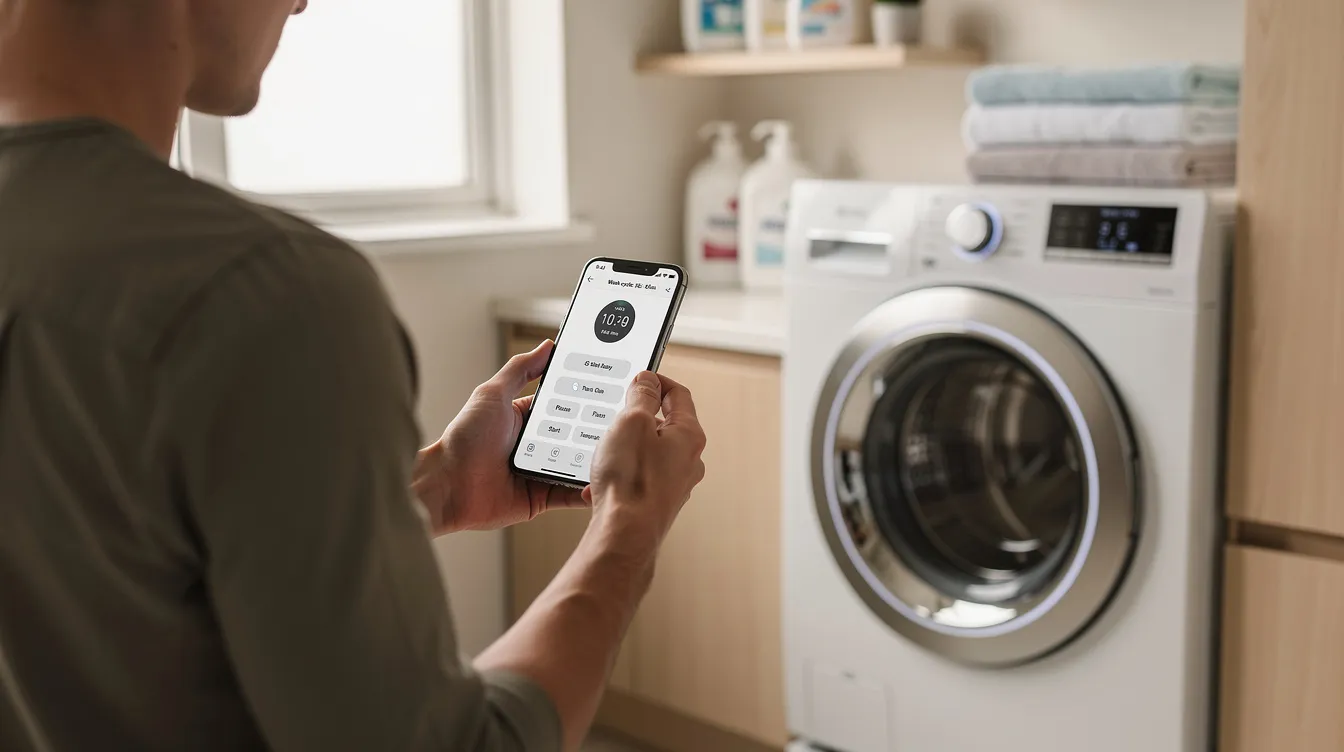
Wi-Fi and app control. Smart washing machines can be controlled via mobile apps. Samsung's SmartThings app lets you start, pause, and monitor cycles remotely, receive notifications when a load finishes, and download new programmes. Smart connectivity allows remote monitoring and control of wash cycles via a smartphone, which is convenient for busy households who start a wash before leaving the house.
Automatic dosing. Many modern washers feature automatic dosing for detergent. The machine stores liquid detergent in a reservoir and dispenses the correct amount based on load size. Miele's TwinDos system automatically dispenses detergent during cycles. Samsung's AI models do the same. This prevents over-soaping, protects fabrics, and saves detergent over time. The detergent drawer on auto-dosing machines needs refilling only every few weeks.
AI wash cycles. AI technology adjusts water and detergent based on fabric type. Automatic load sensing adjusts water usage based on the weight of the laundry, so a half-load does not use a full load's worth of water. These cycles may run longer than the time shown on the control panel, because the machine extends or shortens phases depending on what its sensors detect.
If you prefer simplicity, focus on a machine with a clearly labelled control panel and physical dials rather than paying for smart tech that sits unused. A child lock and delay timer cover most practical needs without requiring a smart app.
Noise, Vibration and Installation Quality
Correct installation has as much impact on noise as the machine's engineering. An unlevel or poorly sited washer can turn even a quiet model into a disruptive one during the spin cycle.
Start with the basics. Remove transit bolts (left in by mistake more often than you would expect). Use a spirit level on the top of the drum. Adjust the feet until the machine sits perfectly flat. Avoid placing machines on flimsy wooden platforms or raised plinths that amplify vibration.
Professional installation matters most for integrated models and stacked washer-dryer setups, where incorrect fitting can damage cabinetry or cause the stack to shift during spin. Mullen Domestic's delivery and installation service covers levelling, hose connection, a test programme, and wi fi connection setup where relevant.
Mullen Domestic's installers also take away and responsibly dispose of your old machine on the same visit, which eliminates the need to arrange separate collection.
Capacity Guide: 7 kg vs 8 kg vs 9 kg and Above
Washing machine drum capacity is usually measured in kilograms of dry laundry. The maximum weight figure on the spec sheet represents the heaviest load the machine can handle on its cotton programme. Overloading reduces wash quality and increases wear on bearings and seals.
Rules of thumb:
-
7–8 kg: A 7–8 kg capacity suits 1–2 people. Enough for daily clothes, a few towels, and bedding washed separately.
-
8–9 kg: Drum capacities of 8 kg to 9 kg suit average families of two to four. Handles school uniforms, casual clothes, and a set of towels in one cycle.
-
9–10 kg: Fits families of three to five. Handles a week's worth of laundry in fewer loads.
-
10–12 kg: A 10–12 kg capacity is ideal for 5+ people. Accommodates duvets, curtains, and sports kits without splitting loads.
Drum size needs to be matched with household size requirements for efficiency. A large capacity machine run half-empty uses more energy per kilo of laundry than a smaller machine run full.
Think about bulky items. If you plan to wash king-size duvets and heavy throws at home rather than at a launderette, a 10 kg minimum is practical. If space and budget allow, err slightly larger, but commit to running full or near-full loads.
Mullen Domestic staff help customers visualise load size in person. Bring in a typical week's worth of laundry details (how many school uniforms, towels, gym kits) and they will match you to the right drum.
Fabric Care Features and Specialist Programmes
The best washing machines protect clothes as well as clean them. Extending the life of everyday garments saves money; a shirt that lasts three years instead of one is cheaper than any eco mode saving.
Key fabric care functions to look for:
-
Wool and hand wash cycles run at lower temperature with gentle drum action, preventing shrinkage and felting.
-
Steam refresh loosens creases and removes odours from suits and school uniforms without a full wash, saving water and time.
-
Anti-crease and pre-iron options tumble clothes gently at the end of a cycle to reduce wrinkles.
-
Extra rinse programmes remove residual detergent, helpful for sensitive skin and baby clothes.
Specific examples: Miele's honeycomb drum is textured to create a thin film of water between clothes and the drum wall, reducing friction. The Miele WQ 1000 WPS has a 20-year lifespan and excellent cleaning results, making it a premium option for buyers who value longevity. Hotpoint's Anti-Stain technology uses targeted pre-wash cycles for red wine, grass, and food stains. Samsung's Bubble Soak saturates clothes in detergent foam before the main wash, tackling most stains without high heat.
Before you buy, confirm that any must-have programme (20°C eco, fast 15-minute wash, duvet cycle) is present. Ask Mullen Domestic for a live demo if you are unsure how a specific cycle works.
Where Mullen Domestic Fits In: Local Expert, Not Just a Website
Mullen Domestic is a family-run retailer that has operated from Enniskillen since 1983. The showroom covers 10,000 sq ft and stocks home appliances, bathrooms, flooring, tiles, and heating solutions. It is a local alternative to chains like Currys and AO.com, with the kind of face-to-face advice that a website cannot replicate.
Core services for washing machine buyers:
-
Free local delivery around Enniskillen
-
Installation options including levelling, hose connection, and test runs
-
Removal and disposal of old appliances
-
After-sales support, spare parts sourcing, and warranty guidance
-
Related home improvement services: utility room tiling, flooring, bathroom refurbishments, and heating
The showroom displays freestanding and integrated washing machines side by side, with energy labels visible. You can compare load size, noise level, and control panel layout in person rather than relying on photos.
Bring your room measurements, photos, and your current energy bill. Staff will give you personalised advice on choosing an energy efficient replacement that actually fits your kitchen or utility room. For a broader view of options available locally, see the guide to best washing machines in Enniskillen.
Delivery, Installation and Old Appliance Disposal
A smooth delivery and installation can matter as much as picking the right model. A machine that arrives damaged, is installed crookedly, or cannot fit through the doorway creates frustration that no feature list can fix.
Before delivery day:
-
Measure doorways, hallways, and stairwells between the front door and the machine's final position.
-
Confirm water inlet and waste pipe locations.
-
Decide which side the door should open (some models have fixed hinges; check before ordering).
-
Clear the space and disconnect the old machine if doing it yourself.
Mullen Domestic offers free local delivery and can install the new machine, level it correctly, run a short test programme, and set up the wi fi connection where relevant. They also provide safe, environmentally responsible removal of old washers, which is especially convenient for anyone upgrading from a heavy, old appliance.
Ask about installation and disposal options at the point of purchase so everything can be arranged for a single visit.
Maintenance Tips to Keep Your Washing Machine in Top Condition
Simple routine maintenance keeps cleaning performance strong and extends lifespan beyond the typical 7–12 years. Neglect is the main reason machines fail early.
-
Run a drum-clean cycle (usually a hot empty wash at 60–90°C) once a month to clear detergent residue and bacteria.
-
Wipe the door seal after each wash to prevent mould build-up in the rubber folds.
-
Leave the door open between washes for ventilation, where safe to do so (use the child lock if young children are in the home).
-
Clean the detergent drawer and pump filter every two to three months. The inlet filter (behind the water hose) should also be checked periodically.
-
Avoid chronic overloading. Running consistently above the rated maximum weight strains bearings, shocks, and the motor.
Use the right amount of detergent. In soft-water areas, less is needed. Over-soaping causes build-up inside the drum and on fabrics.
Mullen Domestic can supply spare parts (pumps, hoses, door seals, filters) and recommend trusted local engineers if a repair is needed. Generally speaking, a machine that is maintained will outlast one that is not by several years.
When to Repair vs Replace Your Washing Machine
Washing machines typically last between 7 and 12 years. When a fault appears, age, fault type, and energy efficiency determine whether a repair or a new machine is the better choice.
Rule of thumb: if repair costs exceed roughly half the price of a comparable new machine, or if the machine is older than 10 years and carries a D, E, or F energy rating, replacement makes more financial sense. A new A or B-rated model will cut running costs enough to offset part of its purchase price within three to five years for a family washing frequently.
Usually worth repairing:
-
Door seals (£30–£80 fitted)
-
Blocked pump filters (often free if DIY)
-
Simple drain pump replacements
Often better to replace:
-
Drum bearings on sealed drums (labour-intensive, sometimes £200+)
-
Main control board failures (£150–£300 for parts alone)
-
Motor burnout on older brush-motor machines
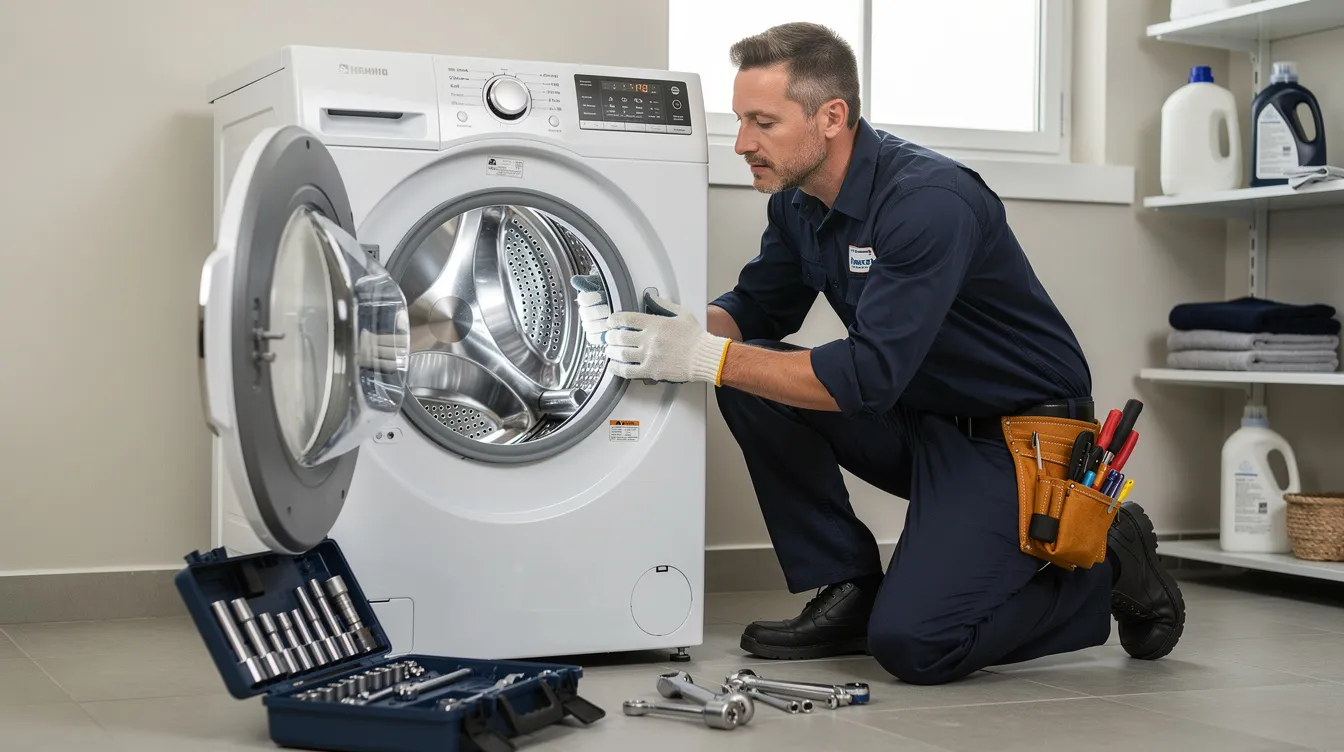
For more detail on the warning signs, read Mullen Domestic's guide on 5 signs it's time to replace your washing machine. Contact the team with your machine's make, model, age, and symptoms. They will give honest guidance on whether a repair or replacement is the smarter option.
FAQ: Domestic Washing Machines Answered
These FAQs cover practical questions not fully addressed in the main guide, based on common conversations in the Mullen Domestic showroom.
Do I need a hot-water feed, or will a cold-fill washing machine be enough?
Almost all modern UK washing machines are cold-fill only. They heat water internally using an electric element, so a single cold tap and a standard 13A plug socket are all you need. A small number of premium or continental models can accept a hot feed, but these are rare in the UK market. A cold-fill setup works well with modern combi boilers. Before installation day, check that the cold tap is accessible, the hose length reaches, and there is adequate water pressure. Mullen Domestic staff will flag any special plumbing needs before the sale.
How much water does a modern washing machine use per cycle?
Modern front-loaders use roughly 35–60 litres on a typical Eco 40–60 cycle. The Beko B3W5841 uses about 47 litres; the Hotpoint NSWM 945C uses about 50 litres. Older machines from a decade ago often used 70–100 litres for the same load. Eco mode cycles use less water but run longer. Water consumption figures appear on the product's energy label and in the manual. Mullen Domestic can help you compare these numbers side by side when choosing between other models.
What programmes should I use for most of my laundry?
Most households will rely on three cycles. Use Eco 40–60 for everyday cottons and mixed loads; it balances cleaning performance with energy efficiency and is the best cycle for keeping running costs low. A synthetic or mixed-fibre cycle handles polyester blends and sportswear. A quick cycle covers lightly soiled clothes and small loads when time is short. For bedding, towels, and baby items, run a 60°C cotton or hygiene programme occasionally to kill bacteria. Always follow care labels to wash clothes without damaging them.
Can I put my washing machine in a garage or outbuilding?
It is possible, but several factors need attention. Most manufacturers specify a minimum operating temperature of 5°C; below that, residual water in hoses and pumps can freeze and crack. The floor must be level and solid (concrete, not timber decking). You need a dedicated 13A socket on its own circuit, a cold water supply, and proper drainage. If your garage drops below freezing regularly, a utility room or under-stairs cupboard is a safer location. Mullen Domestic can advise on suitability during a pre-purchase chat.
How long should a good washing machine last if I look after it?
With regular maintenance (cleaning filters, running monthly drum-clean cycles, avoiding overloading), a quality machine from a leading brand can last 10 years or more. The Miele WQ 1000 WPS is designed for a 20-year lifespan with proper care. Samsung and Bosch offer extended warranties on motors and drums when you register the appliance. Keep your receipt and warranty documentation. Mullen Domestic can help manage warranty claims and source spare parts if anything goes wrong during the machine's life.